The request comes in almost weekly, usually from Europe and usually in this form: eight days, San Francisco, Los Angeles, San Diego, Yosemite, and the Grand Canyon. The Grand Canyon is in Arizona. San Francisco to Los Angeles is three hundred and eighty miles — six hours on the inland interstate, and closer to ten if you take the coast road, which is the entire reason to drive it. California is not a country you can do. It is four or five separate trips wearing one name.
The central coast
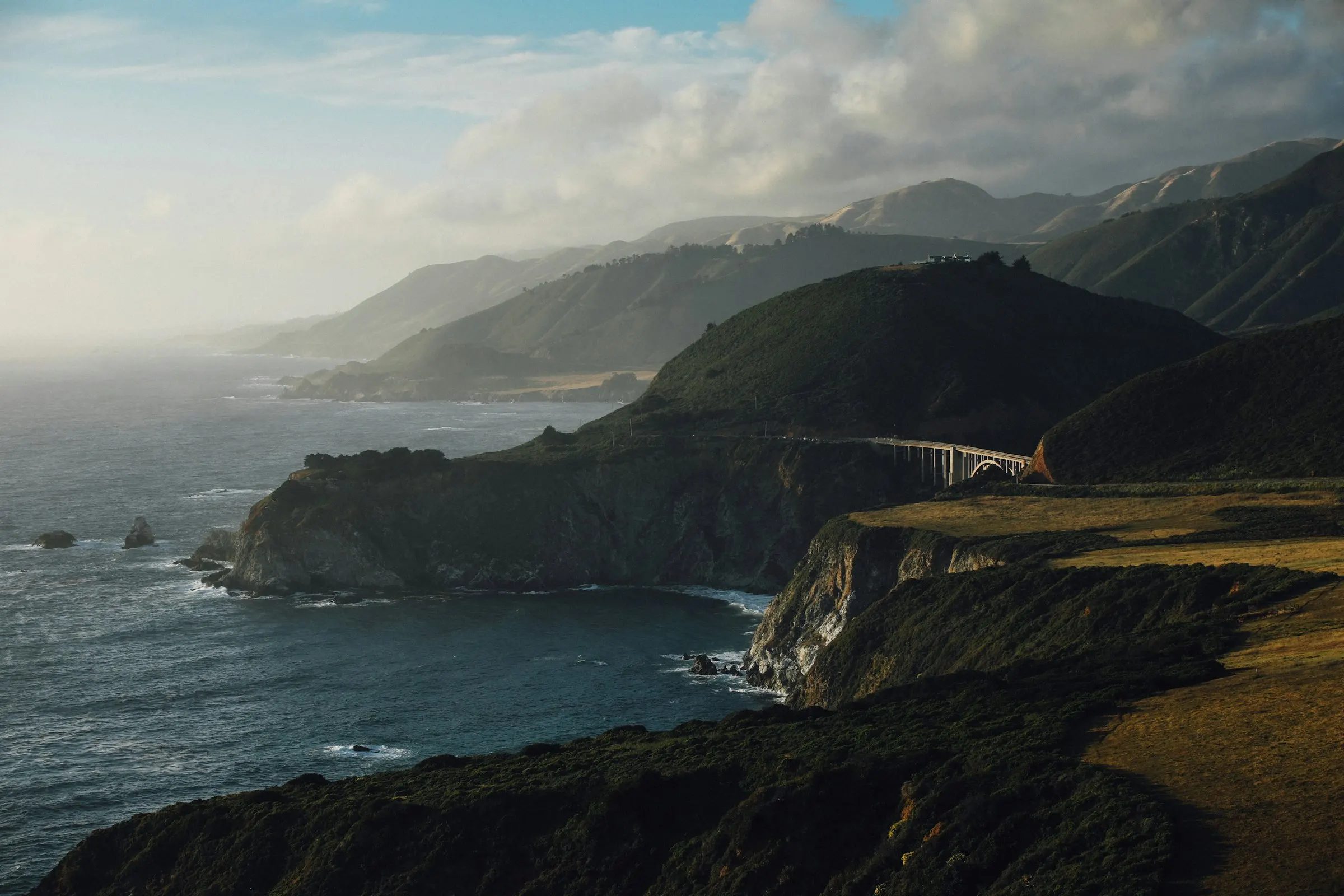
So pick a region. The most reliably wonderful is the central coast. Highway 1 from Carmel through Big Sur is ninety miles that will take you all day and should. Stop constantly. Stay two nights somewhere in Big Sur itself rather than driving through it, because the road is the destination and the light at either end of the day is the point. One practical warning: Highway 1 through Big Sur closes with some regularity after winter landslides, sometimes for months. Check it before you commit — a closure turns a scenic drive into a four-hour inland detour.
Wine country
If it's wine, the honest answer is that Sonoma is the better trip and Napa is the better-known one. Sonoma is spread out, more rural, and the tasting rooms are more likely to be staffed by someone who made the wine. Napa does grandeur and does it well, but it books up and prices accordingly. Either way, three nights, a driver, and no more than three wineries a day — a rule everyone breaks once.
The Sierra
For mountains, the Eastern Sierra is the state's most underrated stretch: Highway 395 running up the back side of the range past Mono Lake and into Mammoth, with the Sierra crest to your left the whole way. It's a very different California from the one on postcards, and almost no international visitors go. Yosemite sits on the other side of the same mountains, and timing matters enormously — the waterfalls peak in May and June with snowmelt and are often reduced to a trickle by late August, while Tioga Pass, the road across the park, is generally closed from November until late May or June.
The deserts
The deserts run on an inverted calendar. Death Valley and Joshua Tree are at their best from November through March and genuinely dangerous in July. If your dates are in summer, go north and high; if they're in winter, go south and low. That single rule solves most California itineraries.
The fog
The last thing worth knowing is the fog. Coastal California in June and July is frequently grey and cold — San Francisco in particular sits under a marine layer for much of the summer, and visitors arriving in shorts are a permanent local joke. The coast is at its warmest and clearest in September and October, which is also when the crowds have gone. If you have any flexibility at all, go then.
The far north
The region almost nobody asks for is the far north, and it's the one we'd send a returning visitor to. Mendocino sits three and a half hours above San Francisco on a coastline that looks like the one in the films but has roughly a tenth of the traffic, and beyond it the redwood parks run up towards the Oregon line with trees that genuinely reset your sense of scale. It is cooler, greyer, and emptier than the rest of the state, and it rewards people who have already done the postcard version and want the quiet one.
How long to give it
Ten nights does one region properly with room to breathe. Fourteen does two. Anything shorter means one region, and you'll enjoy it more.